Water is life. Why?
Water is life. The first time I heard this phrase I had no idea what it meant. Why didn’t I understand? I heard the phrase during the Lakota protest to protect the Standing Rock Sioux reservation from the North Dakota Access Pipeline. “Water is life,” I heard. Or, as a friend reminded me, “ Mni wiconi “ in Lakota. The phrase must have made its way to me through television media in 2016.
Water is life was a phrase I never heard before the Standing Rock protest of the Dakota Access Pipeline. It appealed to me because it did feel emotional. In the world I lived in I never saw anyone fight for water with a simple message or an ethical message.
In the working world where the government deals with water, complexity rules. Water was something controlled through legal and political paths. There is no deeper dimension to it. If you are willing to study the maze of laws that govern water, you will learn thousands of interesting facts, but simplicity is not a takeaway.
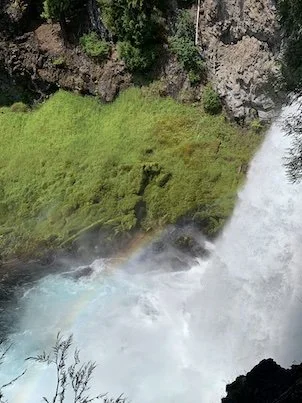
What is my emotional connection to water? Something to make living a little easier and softer. Hiking the mountain streams. Visit the beach and sleep with the sound of the waves. Take deep steps in the snow. Watch rainbows in waterfalls.
When I do work in water, it’s practical, dry and factual. Hardly full of philosophical meanings. Pipes, pumps, filters, construction and money fill my mind up. My passion and those of peers is a latent force, stored up for special occasions. When colleagues speak to me about their passion for water, it’s during rites of passage like retirements. I learn from experienced practitioners that to improve the water, the whole mindset of governance has to change. River shape and freedom to move are more important than technical treatment. Fixing a river needs people who have stood on its banks many times to know it intimately, how each ripple should look. Repair is not really about pipes and engineering. But amidst the daily effort to govern water, the practical wins out.
Since I worked in water, I could use my skills to try and piece together what happened near the Standing Rock reservation. I don’t understand the full breadth of the protest, but I wanted to understand a little. What was the problem? The first part was building a pipeline that put a drinking water intake at risk of an oil spill. I know most drinking water utilities face the potential that a spill will happen on the river, and the more time they have to prepare after a spill the better for the water supply. The Standing Rock reservation in North Dakota has a drinking water intake on the Missouri River. Energy Transfer Partners wanted the Dakota Access Pipeline to carry oil across the river. They chose a river crossing less than one mile from the drinking water intake. Any water utility in America will tell you this is bad. How much time would it take for a potential oil spill to float downriver to the intake? Minutes or an hour. Not enough time to give notice to the drinking water treatment workers or for them to respond. After the protest, they adjusted the pipeline to 10 miles upstream.
The second piece I gleaned was why the US government was involved in the first place. I scanned through the pages of the environmental review and pieced together some impressions of the process. First, the project needed a permit because of the river crossing since rivers are government property and jurisdiction. They successfully qualified for an expedited permit which was a huge win because it meant that no unique environmental study was required. The permit got a historic and cultural review. There were several government employees from the historic and cultural offices that did not recommend the project. They explained that the drinking water intake was too close to the tribal drinking water. Letters with this concern were sent with urgent language. However, at the end of the day the complaints were not taken seriously and the pipeline received the permit, which was their official approval from the US government. Lastly, the tribes were notified but not engaged in a meaningful way. Just a few letters were sent out. Maybe a meeting was held but it was not well noticed in the community. Technically, there was a public participation process, but at the end of the day, it wasn’t conducted with genuine interest in those that would be impacted by the project.
Working in water, all the time is spent in the intricacies of the government processes. The big questions get forgotten. The human right to water doesn’t come up much, because most communities visible to the governments I work with have reliable water.
When musing about why water is life, my thoughts ramble all over. Walking by a mountain stream on Mt. Hood, I looked at the stream surrounded by green firs and snow, and puzzled over this question. “Why are you life?” I asked the stream. I read somewhere that for indigenous Americans water connected humanity to its past, because the original water from our mothers has been passed down to us. I imagined little souls swimming in this stream. I didn’t understand.
Perhaps in Oregon I didn’t understand that water is life, because it’s always there. It would take a visit to a dry place to begin to pull the wool from my eyes. I will describe that visit in an upcoming segment.
